Six Technologies That Could Let Humans Live on Mars Permanently
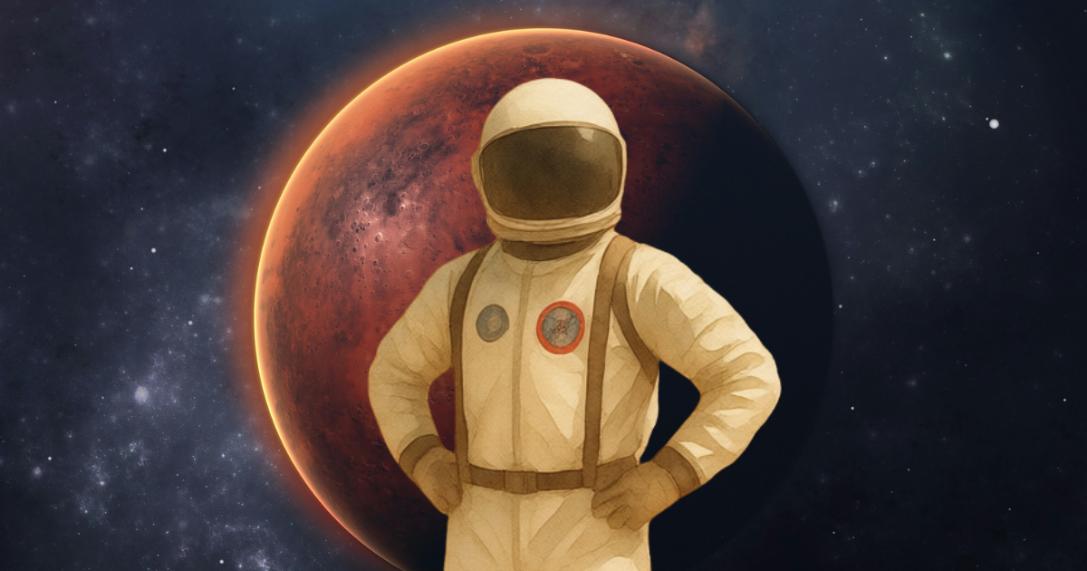
Discover six groundbreaking technologies that could make permanent human life on Mars possible, from oxygen production and space farming to AI-powered habitats and 3D printing.
Six Technologies That Could Let Humans Live on Mars Permanently
For decades, Mars has captured humanity’s imagination. What once seemed like pure science fiction is now the focus of ambitious space programs led by agencies and private companies alike. Sending astronauts to Mars is only the first step. The real challenge is enabling people to live there permanently.
Mars is a hostile world. Temperatures can drop below -120°C, its atmosphere is too thin to breathe, radiation levels are dangerous, and there is no readily available food or liquid water on the surface. Building a sustainable civilization will require technologies that can solve each of these problems.
Here are six revolutionary technologies that could make permanent human life on Mars a reality.
Here are six revolutionary technologies that could make permanent human life on Mars a reality.
1. Oxygen Factories That Turn Martian Air into Breathable Air
Mars’ atmosphere is made up of about 95% carbon dioxide, making it impossible for humans to breathe naturally. Instead of transporting enormous amounts of oxygen from Earth, future colonies will likely produce it directly on Mars.
Specialized oxygen-generation systems can split carbon dioxide into oxygen and carbon monoxide using electrolysis. Similar technology has already been successfully demonstrated on Mars, proving that oxygen can be produced using local resources.
These systems would provide breathable air for astronauts while also producing oxygen needed as rocket fuel for return missions.
2. Space Farms That Grow Fresh Food Year-Round
Carrying enough food from Earth would be extremely expensive for a permanent colony. Mars settlers will need to grow their own crops.
Future Martian farms may use hydroponics and aeroponics, where plants grow without traditional soil. Artificial lighting, recycled water, and controlled environments would allow vegetables, fruits, and grains to grow despite the harsh outside conditions.
Scientists are also researching ways to improve Martian soil by removing harmful chemicals and adding nutrients, making outdoor farming possible in the distant future.
Fresh food would improve both physical health and mental well-being for long-term settlers.
3. 3D Printers That Build Entire Homes Using Martian Soil
Transporting building materials from Earth would cost billions of dollars. Instead, future colonies may use giant robotic 3D printers to build structures from Martian soil, also known as regolith.
These printers could create homes, laboratories, storage facilities, and even landing pads using locally available materials.
This approach would dramatically reduce mission costs while allowing settlements to expand as more people arrive.
Researchers are already testing similar construction methods for both lunar and Martian habitats.
4. AI-Powered Robots That Work Before Humans Arrive
Artificial intelligence will play a major role in preparing Mars for human settlement.
Autonomous robots could land years before astronauts and begin constructing habitats, installing solar panels, extracting water, and inspecting equipment.
Once humans arrive, AI systems could monitor life-support equipment, manage energy consumption, predict equipment failures, and assist with medical emergencies.
By handling dangerous and repetitive tasks, robots would allow astronauts to focus on scientific research and exploration.
5. Water Extraction Systems Hidden Beneath the Surface
Although Mars appears dry, scientists have found evidence of frozen water beneath its surface and within its polar ice caps.
Future colonies may drill underground to access this ice before melting and purifying it.
Water will serve multiple purposes, including:
- Drinking
- Growing crops
- Producing oxygen
- Manufacturing rocket fuel
- Personal hygiene
- Industrial processes
Reliable water extraction will be one of the most important technologies for permanent settlement.
6. Radiation-Shielded Habitats That Protect Human Life
Unlike Earth, Mars lacks a strong magnetic field and thick atmosphere to block harmful cosmic radiation.
Long-term exposure increases the risk of cancer, organ damage, and other serious health problems.
Future habitats may solve this by being built underground or covered with thick layers of Martian soil. Engineers are also developing advanced shielding materials containing hydrogen-rich compounds and other radiation-absorbing materials.
Combined with smart habitat design, these protective systems could make long-term living on Mars much safer.
Why This Matters
A permanent settlement on Mars would represent one of humanity’s greatest technological achievements. The innovations required for survival on another planet could also improve life on Earth.
Technologies developed for Mars—such as water recycling, renewable energy systems, AI automation, advanced robotics, and efficient agriculture—could help solve many of Earth’s environmental and resource challenges.
Mars is not just about exploring another planet; it is about expanding humanity’s ability to survive, innovate, and adapt.
Conclusion
Living permanently on Mars remains one of the most difficult engineering challenges ever attempted. Yet rapid advances in artificial intelligence, robotics, space agriculture, oxygen production, habitat construction, water extraction, and radiation protection are bringing that vision closer to reality.
While the first permanent Martian city may still be decades away, the technologies needed to build it are already being developed today. Every breakthrough moves humanity one step closer to becoming a multi-planetary civilization.
Follow SixGlobe for more fascinating articles exploring the future of technology, science, space, and the innovations shaping tomorrow.













Post Comment