Six SpaceX Ideas That Sounded Completely Crazy—Until They Started Working
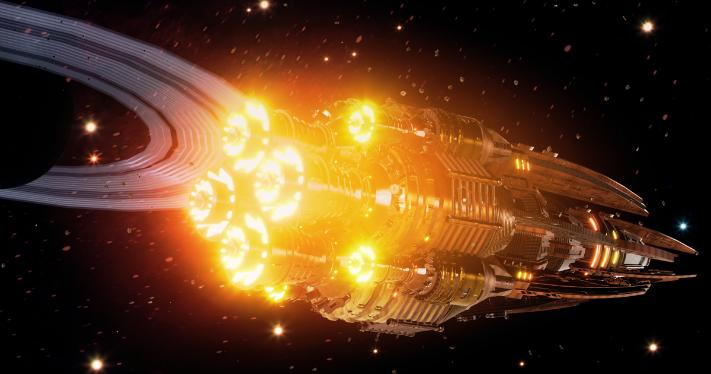
Six SpaceX ideas once considered crazy—from rocket landings to giant rocket catches—that are now changing the future of space travel.
Six SpaceX Ideas That Sounded Completely Crazy—Until They Started Working
Six SpaceX Ideas That Sounded Completely Crazy—Until They Started Working
For decades, rockets were treated almost like disposable machines. Launch one, lose most of its hardware, build another, and repeat. SpaceX challenged that logic with ideas that initially sounded unrealistic—even reckless.
Some of those ideas failed spectacularly. Others worked only after years of explosions, redesigns and criticism. But several eventually became technologies that changed how the space industry thinks about rockets.
Here are six SpaceX ideas that once sounded crazy—but started working.
1. Landing a Rocket Back on Earth
The idea was simple to describe and extremely difficult to achieve: launch a rocket, separate its payload, turn the booster around, and land that same booster vertically.
Traditional orbital rockets were largely expendable. SpaceX wanted to recover the expensive first stage and fly it again.
The first attempts ended dramatically. Boosters crashed, tipped over, or exploded. But SpaceX kept improving the system.
In December 2015, Falcon 9 successfully landed its first stage at Cape Canaveral after delivering its payload to orbit. It was a major milestone for reusable rocketry.
The bigger breakthrough came afterward. SpaceX demonstrated that a booster could be recovered and launched again, turning rocket reuse from an engineering experiment into an operational capability.
The crazy part wasn’t simply landing a rocket.
It was trying to make rocket hardware behave more like an aircraft—something that could return, be prepared, and fly again.
2. Launching the Same Booster Again and Again
Landing a rocket was only half the challenge.
A rocket sitting safely on a landing pad doesn’t automatically make spaceflight cheaper. The real question was whether the hardware could be reused economically.
SpaceX therefore pushed Falcon 9 boosters toward repeated flights.
Instead of treating every booster as a one-time machine, the company developed systems for inspection, refurbishment and rapid turnaround.
That changed the economics and psychology of launch.
The industry had spent decades accepting that throwing away a rocket was normal. SpaceX demonstrated that at least part of an orbital launch vehicle could instead become a reusable asset.
And that created a strange new possibility:
What if the most expensive part of going to space wasn’t supposed to be thrown away?
3. Catching a Giant Rocket Booster With a Tower
SpaceX then took rocket recovery in an even stranger direction.
Instead of landing a future Starship booster on legs, the company designed a system in which the launch tower itself could catch the returning vehicle using large mechanical arms.
The concept became known as the “chopstick” catch system.
It sounds almost cartoonish: a gigantic rocket comes back from space and a tower grabs it.
But there is an engineering reason behind the idea.
Landing legs add mass and complexity. A tower-based recovery system potentially allows the vehicle to return without carrying substantial landing hardware solely for the final touchdown.
More importantly, the concept is connected to SpaceX’s broader goal for Starship: rapid reuse rather than simply survivable reuse.
If a spacecraft and booster can be recovered quickly and require minimal refurbishment, the entire launch operation could start looking less like traditional rocketry and more like transportation infrastructure.
The idea still involves enormous technical challenges—but the fact that SpaceX is attempting it shows just how far the company has pushed the concept of rocket reusability.
4. Building a Rocket Designed to Be Caught, Not Landed
SpaceX’s Starship architecture takes the reuse philosophy even further.
Instead of designing a conventional expendable upper stage and adding recovery capabilities later, Starship was conceived around full reusability.
The spacecraft is intended to return to Earth, while its Super Heavy booster is also designed for recovery.
That creates a completely different design philosophy.
The question is no longer:
“How do we recover this rocket?”
It becomes:
“How do we build the rocket so that recovery is part of its normal operation?”
Starship has experienced multiple test failures, explosions and major redesigns. But those failures are part of what makes the project unusual.
SpaceX is effectively using flight tests to develop an enormous reusable transportation system in public.
If the architecture eventually achieves its intended level of reusability, it could change the scale at which spacecraft are manufactured and launched.
5. Using Thousands of Satellites to Provide Internet
Before Starlink became a major satellite constellation, the idea of putting thousands of internet satellites into low Earth orbit sounded excessive.
Traditional satellite internet relied on relatively small numbers of large, expensive satellites placed much farther from Earth.
SpaceX took a different approach.
Starlink uses a huge constellation of satellites in low Earth orbit, allowing signals to travel a shorter distance between the satellites and users on the ground.
But there was another unusual part of the plan.
SpaceX wasn’t merely developing the satellites. It also controlled a major part of the launch system needed to put them into orbit.
That created a powerful vertical integration loop:
Build satellites → launch them using SpaceX rockets → operate the network → generate revenue → launch more satellites.
The experiment turned SpaceX from simply a rocket company into something much closer to a space infrastructure company.
And it demonstrated another unusual idea:
Maybe space infrastructure doesn’t have to be built one giant satellite at a time.
6. Building a Spacecraft That Could Eventually Become a Transportation System
Perhaps the biggest SpaceX idea isn’t about rockets at all.
It’s the possibility that Starship could eventually become a reusable transportation system capable of moving enormous amounts of cargo—and potentially people—between Earth and destinations beyond it.
That vision goes far beyond today’s normal launch business.
A conventional spacecraft is generally designed around a specific mission. Starship is being developed around the idea of a highly reusable vehicle with enormous payload capacity.
That opens up possibilities ranging from large-scale lunar missions to deploying infrastructure in space.
But there is a crucial distinction between possibility and reality.
Many of Starship’s most ambitious long-term goals remain unproven. Reaching orbit is only one step. Reliable reuse, rapid turnaround, orbital refueling, long-duration operations and safe crewed missions are much harder problems.
That’s precisely what makes the concept so fascinating.
SpaceX isn’t merely asking:
“Can we build a bigger rocket?”
It’s asking:
“What happens if space transportation becomes dramatically more reusable?”
The Bigger Idea Behind SpaceX
These six ideas have something in common.
SpaceX repeatedly questioned assumptions that had become normal in the space industry.
Rockets had to be expendable.
Rocket boosters couldn’t routinely return to their launch sites.
Reusable rockets weren’t practical.
Satellites didn’t need to be produced in huge numbers.
Rocket recovery had to involve landing legs.
Spacecraft were primarily built around individual missions.
Some SpaceX experiments failed. Some are still being tested. And some of the company’s biggest promises remain uncertain.
But that may actually be the most interesting part of the story.
SpaceX’s biggest impact may not come from any single rocket.
It may come from convincing the industry that some things everyone considered impossible were actually engineering problems waiting for someone stubborn enough to attack them.
And if even a few of SpaceX’s most ambitious ideas eventually become routine, today’s “crazy” concepts could become tomorrow’s normal way of traveling beyond Earth.
🚀 Follow SixGlobe
The future often looks crazy before it becomes normal. Follow SixGlobe for more stories about the ideas, technologies and companies changing the world.













Post Comment