Six Technologies That Could Make Smartphones Obsolete
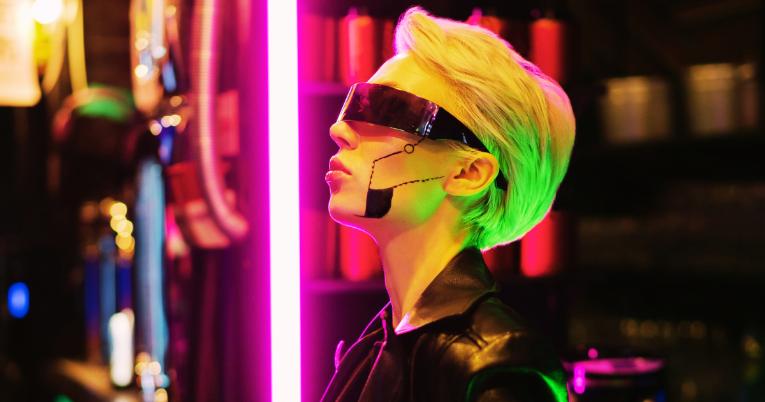
Technologies That Could Make Smartphones Obsolete
From AI smart glasses to brain-computer interfaces, these six emerging technologies could eventually make the smartphone obsolete. Here’s what the future might look like.
Six Technologies That Could Make Smartphones Obsolete
Let’s be honest for a second.
Smartphones are everywhere. They’re in our pockets, our hands, our faces. We use them for everything—talking, working, navigating, shopping, watching videos, taking photos, asking AI questions. They’ve become basically an extension of our bodies.
But here’s the thing about technology: it never stays still.
Remember when phones were attached to walls? Remember when we carried around separate devices for music, maps, and cameras? Everything changes eventually.
And smartphones? They’re probably not going to be the final form of personal computing.
A new generation of technologies is already emerging that could make the pocket rectangle less important—or maybe even completely obsolete.
Here are six technologies that could change how we interact with the digital world.
1. AI-Powered Smart Glasses
Imagine this: you’re walking down the street and you need directions. Instead of pulling out your phone, unlocking it, opening Maps, and typing in an address…
You just… ask.
AI-powered glasses are moving toward exactly that experience. They combine cameras, microphones, speakers, and artificial intelligence to recognize objects, answer questions, translate languages, give directions, and even capture photos.
As these systems get smaller, lighter, and more capable, why would you ever pull a rectangular screen out of your pocket again?
Suddenly, your glasses aren’t just for seeing. They’re your assistant. Your map. Your translator. Your camera.
The bottom line: The screen you look through could replace the screen you look down at.
2. Augmented Reality Contact Lenses
Smart glasses might just be step one.
Researchers are already exploring augmented-reality contact lenses. Yes, you read that right. Lenses that place digital information directly into your field of vision.
Instead of checking a map on your phone, directions could appear naturally in front of your eyes. Messages, notifications, translations—all floating right there, seamlessly integrated with what you’re actually seeing.
Sounds like sci-fi? It’s being worked on right now.
The biggest challenges are making this safe, comfortable, affordable, and practical enough for everyday use. But if they crack it? The phone in your pocket starts looking pretty clunky.
The bottom line: The ultimate screen might be one you’re already looking through.
3. Brain-Computer Interfaces
Okay, now we’re getting wild.
What if you could control a computer just by thinking about it?
Brain-computer interfaces translate neural signals into digital commands. It sounds like something from a futuristic movie, but it’s already being researched for medical applications—helping people with severe disabilities communicate or control external devices.
If these interfaces become reliable and non-invasive enough, the whole relationship between humans and computers changes.
No touchscreen. No voice commands. Just thought.
The bottom line: Your thoughts could become the interface. No phone required.
4. Voice and AI Assistants
Right now, your smartphone is the gateway to your digital assistant. You pick up your phone, open an app, type a search, and then do whatever task you needed.
But AI assistants are getting smarter. And they might eventually remove the need for that gateway.
Imagine this: instead of opening an app and doing everything yourself, you just tell an AI what you want. It searches information, makes arrangements, summarizes documents, communicates with services, and coordinates everything on your behalf.
Your phone becomes less of a device and more of a background connection. You don’t need to look at it. You just need to talk.
The bottom line: The device could fade into the background while the AI does the heavy lifting.
5. Wearable and Body-Integrated Tech
Smartwatches and fitness trackers are already pulling some computing away from the phone. Notifications, health tracking, payments—you can already do some things without pulling out your pocket rectangle.
But future wearables could be way more capable. Health monitoring, communication, authentication, payments, navigation, AI assistance—all packed into increasingly compact devices you wear on your body.
Instead of carrying one powerful computer in your pocket, you could wear several small devices that work together seamlessly.
The bottom line: Computing could spread across your body instead of living in your pocket.
6. Ambient Computing
This one’s the most radical.
What if the smartphone isn’t replaced by one thing—but by everything?
Ambient computing is the idea that technology becomes embedded into the environment around us. Your home, your vehicle, your workplace, your headphones, your glasses, your appliances—all communicating with each other and responding intelligently to what’s happening.
You don’t carry a single device that does everything. Your environment becomes the computer. The technology is just… there. In the background. Working for you without you even thinking about it.
The bottom line: The best interface might be no visible interface at all.
Will Smartphones Actually Disappear?
Alright, let’s be realistic for a second.
Even if all these technologies become mainstream, smartphones probably aren’t vanishing overnight.
They’re cheap. They’re powerful. They’re familiar. They’re deeply integrated into global infrastructure. Billions of people have them. It would take something truly mind-blowing to make everyone abandon something that already works incredibly well.
What’s more likely is a gradual shift. The smartphone becomes less central—maybe a backup device you keep at home or in your bag. Glasses, wearables, AI assistants, and other interfaces handle the everyday stuff.
But the days of looking down at a screen every few minutes? Those days might be numbered.
Final Thought
The smartphone changed the world by putting a powerful computer into everyone’s pocket.
The next technological revolution could be about taking the computer out of the pocket entirely.
AI glasses. Augmented-reality lenses. Brain-computer interfaces. Intelligent assistants. Advanced wearables. Ambient computing.
Each of these is exploring a different way to make digital interaction more natural. More seamless. Less intrusive.
The biggest question isn’t whether smartphones will disappear tomorrow. It’s whether we will still need to look down at a screen to use technology in the future.














Post Comment