Six Islands That Appear to Be From Another Planet
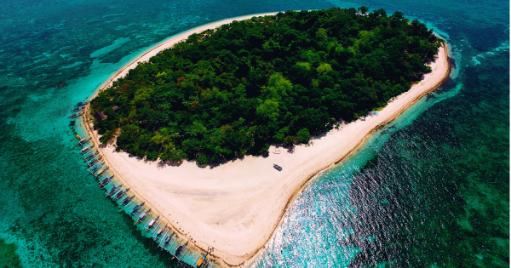
From Socotra’s dragon blood trees to Antarctica’s volcanic Deception Island, these six real places look like they belong on another planet.
Six Islands That Appear to Be From Another Planet
Let’s be real for a second.
When you think of islands, you probably picture palm trees, white sandy beaches, and crystal-clear water. Tropical paradise. Vacation vibes. The whole deal.
But not all islands are like that.
Some are so strange, so otherworldly, that they look like they belong in a science-fiction movie rather than on Earth. Their landscapes were shaped by volcanoes, glaciers, extreme climates, unusual geology, and millions of years of isolation.
The result? Places that feel completely alien—without ever leaving the planet.
Here are six islands that prove you don’t need to travel to another world to see something truly extraordinary.
1. Socotra, Yemen — The Most Alien-Looking Place on Earth
If there’s one island that looks like it belongs on another planet, it’s Socotra.
Located in the Arabian Sea, Socotra has been isolated from mainland Africa and Arabia for millions of years. That isolation allowed an incredible number of species to evolve independently—and they look nothing like anything else on Earth.
Its most famous resident is the dragon blood tree. It has this bizarre umbrella-shaped crown and produces a dark red resin that looks like, well, blood. The tree looks like something from a fantasy novel.
Then there are the bottle trees, limestone caves, dramatic mountains, and enormous sand dunes.
Much of Socotra’s plant life is found absolutely nowhere else on the planet. Walking across its landscape feels less like visiting another country and more like exploring an unfamiliar planet.
The bottom line: If aliens designed a landscape, it would probably look like Socotra.
2. Lanzarote, Spain — A Volcanic Desert on Earth
Lanzarote looks almost nothing like the typical image of a tropical island.
Part of Spain’s Canary Islands, Lanzarote is covered with enormous volcanic landscapes created by powerful eruptions. Vast fields of black and reddish volcanic rock stretch across the island. Mountains and craters dominate the horizon.
In some areas, the ground looks almost completely barren. No trees. No grass. Just rock.
The island’s Timanfaya region is particularly striking, with landscapes shaped by volcanic eruptions that occurred in the 18th and 19th centuries. The ground is covered in black lava, red volcanic cones, and almost no vegetation.
It looks less like an island paradise and more like a planetary landscape photographed on Mars.
The bottom line: Lanzarote is proof that volcanoes can create beauty in the strangest ways.
3. Abd al Kuri, Yemen — Socotra’s Mysterious Neighbor
While Socotra gets all the attention, the smaller island of Abd al Kuri is arguably just as strange.
Located west of Socotra, it has an extremely rugged landscape dominated by mountains, rocky terrain, and harsh environmental conditions. It’s part of the Socotra Archipelago, a region famous for its exceptional biodiversity and geological isolation.
Its remote location means relatively few people ever see it, making it one of the more mysterious islands in the region.
No giant tourist resorts. No crowded beaches. Just austere, untouched landscape that feels like it belongs to another era—or another world.
The bottom line: Sometimes the lesser-known islands are the strangest of all
4. Deception Island, Antarctica — A Volcano in the Ice
Imagine sailing through Antarctica and discovering a volcanic island containing an enormous flooded crater.
That’s Deception Island.
The island is actually the exposed rim of an active volcanic system. A massive eruption in the past caused part of the volcano to collapse, allowing seawater to flood its interior.
Today, ships can enter the island’s sheltered caldera through a narrow opening called Neptune’s Bellows.
Inside, visitors encounter dark volcanic landscapes surrounded by Antarctic scenery. Black volcanic sand. Glaciers. Snow. And an enormous flooded crater right in the middle of it all.
The combination is absolutely surreal—like something from a distant alien world.
And unlike many apparently dead volcanic landscapes, Deception Island is still volcanically active. That adds a whole other layer of “wow.”
The bottom line: Fire and ice don’t just coexist here—they create something unforgettable.
5. Floreana Island, Ecuador — Evolution in Action
Part of the Galápagos Islands, Floreana has a landscape shaped by volcanic activity and isolation.
Its dramatic volcanic terrain includes lava formations, craters, unusual rock structures, and areas of sparse vegetation.
But what makes the Galápagos truly extraordinary isn’t just how the islands look. It’s how life evolved there.
Animals developed in isolation for thousands and thousands of years, producing species and behaviors found nowhere else on Earth.
On Floreana, you can encounter marine iguanas, sea lions, giant tortoises, and unusual birds living in environments that feel completely disconnected from the rest of the world.
The landscape is Earth—but the wildlife makes it feel like an entirely different ecosystem.
The bottom line: The Galápagos are proof that isolation creates the strangest forms of life.
6. Baffin Island, Canada — The Arctic Frontier
Baffin Island in Canada’s Arctic is enormous, remote, and spectacularly rugged.
Its landscape contains towering mountains, deep fjords, enormous glaciers, and vast stretches of Arctic wilderness.
The island’s Auyuittuq National Park is particularly dramatic, with enormous granite peaks rising above valleys carved by ice. Some formations appear almost impossible in scale, especially when surrounded by snow and ice.
During the long Arctic winter, darkness and extreme cold transform the landscape even further.
Standing among these mountains, glaciers, and frozen valleys can feel less like visiting a conventional tourist destination and more like stepping onto the surface of an unexplored world.
The bottom line: The Arctic isn’t just cold—it’s otherworldly.
Conclusion
Earth is full of landscapes that challenge our idea of what another planet might look like.
Socotra’s bizarre plants, Lanzarote’s volcanic deserts, Deception Island’s flooded crater, and Baffin Island’s frozen mountains all show how dramatically geology and climate can transform an island.
The best part? These landscapes aren’t fictional.
They are real places on Earth—and they are every bit as strange as another planet.
SixGlobe Takeaway
You don’t need to travel to another planet to see something truly alien.
Earth is filled with landscapes so strange, so otherworldly, that they challenge our imagination. From volcanic deserts to frozen fjords, from dragon blood trees to flooded volcanic craters, these islands remind us that our own planet is far more diverse—and far stranger—than we often give it credit for.
The real wonder isn’t what’s out there in space.
It’s what’s already here, waiting to be explored.
Follow SixGlobe
Love discovering hidden wonders, strange landscapes, and fascinating places from around the world?
Follow SixGlobe for more curiosity-driven content that makes you think, wonder, and see the world differently.
From alien-looking islands to forgotten history, from strange jobs to business secrets—we cover it all.
Join the community of curious minds. 🌍











Post Comment