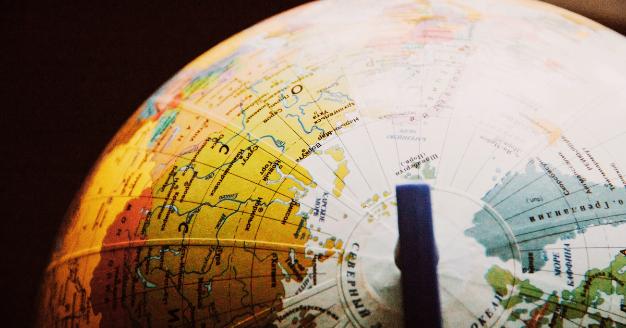

Discover six ordinary-looking borders that could reshape global power, from India-China and Taiwan to Guyana-Venezuela and the Korean DMZ.
Some of the world’s most consequential geopolitical flashpoints don’t look dangerous on a map. A quiet border crossing, disputed mountain valley, or seemingly remote frontier can become the centre of a global crisis faster than most people expect.
Borders are supposed to separate countries. But in geopolitics, they can do something much more important: determine where economic interests, military alliances, natural resources and competing national ambitions collide.
Some borders have remained relatively stable for decades. Others sit on unresolved territorial disputes, strategic trade routes or regions where major powers have competing interests.
Here are six borders that may look ordinary today—but could have an outsized impact on global power if circumstances change.
1. India–China: A Border Where Geography Meets Superpower Rivalry
The India–China border stretches across some of the world’s highest and most difficult terrain.
At first glance, much of it appears remote and almost impossible to inhabit. But its strategic significance is enormous.
India and China are two of the world’s largest countries by population, major military powers and increasingly important economic competitors. Their unresolved boundary dispute has produced repeated military confrontations, particularly in the Himalayan region.
The importance of this border goes beyond the territory itself.
The Himalayas contain strategically important mountain passes, roads and high-altitude military positions. The region also sits close to areas connecting South Asia, Central Asia and Tibet.
A serious escalation would therefore involve far more than two neighbouring countries.
It could affect:
- Asian security alliances
- Global supply chains
- Trade between major economies
- Regional military deployments
- Relations between China, India and the United States
The border may look remote.
Its geopolitical consequences would not be.
2. Poland–Belarus: A Small Border With a Large Strategic Meaning
The border between Poland and Belarus may not immediately appear on most people’s list of globally important frontiers.
But its location gives it unusual strategic significance.
Poland is a member of NATO and the European Union. Belarus is closely aligned with Russia.
That places this relatively narrow border near one of the most sensitive security environments in Europe.
The broader region includes the Suwalki Gap, the relatively narrow land connection between Poland and Lithuania that links the Baltic states with the rest of NATO territory while separating Belarus from Russia’s Kaliningrad exclave.
In a major European security crisis, geography here could become exceptionally important.
The border therefore represents something larger than the relationship between Poland and Belarus.
It sits at the intersection of:
NATO territory + Russian strategic interests + Baltic security + European transport routes.
A border that looks ordinary on a map can become strategically critical when powerful alliances meet around it.
3. North Korea–South Korea: The Border That Never Really Disappeared
The Korean Demilitarized Zone, or DMZ, is one of the world’s most heavily fortified frontiers.
Despite its name, it is not simply an empty strip separating two peaceful neighbours.
North Korea and South Korea technically remain at war because the Korean War ended with an armistice rather than a permanent peace treaty.
The border sits close to Seoul, one of Asia’s largest metropolitan areas and a major global economic centre.
That makes this frontier particularly unusual.
A crisis here could rapidly involve:
- South Korea
- North Korea
- the United States
- China
- Japan
- Russia
The Korean Peninsula also contains a sophisticated industrial and technological economy on one side and a nuclear-armed state on the other.
That combination makes the border one of the clearest examples of how a relatively small geographic area can carry enormous geopolitical risk.
The DMZ looks like a line on a map. In strategic terms, it is a fault line between major powers.
4. Guyana–Venezuela: The Border With Oil Beneath It
The Guyana–Venezuela border dispute is particularly important because of what lies offshore.
At the centre of the dispute is the Essequibo region, a large territory administered by Guyana but claimed by Venezuela.
For decades, the dispute remained largely diplomatic.
Then Guyana’s offshore oil discoveries dramatically increased the economic importance of the broader region.
Guyana has become one of the world’s most closely watched emerging oil producers, while Venezuela possesses some of the largest petroleum reserves on Earth.
That combination creates a powerful geopolitical equation:
territory + oil + national identity + regional influence.
Any serious military escalation would therefore attract international attention far beyond South America.
The United States, Caribbean states and other international actors all have interests in regional stability.
What looks like a remote border dispute could consequently influence energy markets, investment decisions and diplomatic relationships across the Western Hemisphere.
5. Armenia–Azerbaijan: A Border Shaped by Corridors
The South Caucasus is one of the world’s most strategically complicated regions.
The Armenia–Azerbaijan frontier is particularly important because the region connects Europe, the Black Sea, Central Asia, Russia, Turkey and Iran.
The geography is not simply about territory.
It is also about transport corridors.
Roads, railways, pipelines and trade routes crossing the Caucasus can influence how energy and goods move between regions.
The conflict surrounding Nagorno-Karabakh has already demonstrated how quickly borders in this region can become internationally significant.
But the future importance of the Armenia–Azerbaijan border may increasingly depend on connectivity.
If new transportation routes are developed, the strategic value of particular corridors could increase dramatically.
That would affect not only Armenia and Azerbaijan but also Turkey, Iran, Russia and European countries seeking alternative trade and energy routes.
In the Caucasus, controlling a corridor can sometimes matter almost as much as controlling territory.
6. China–Taiwan: The Border Question That Could Reshape the Global Economy
Few geopolitical frontiers carry consequences as potentially enormous as the space separating China and Taiwan.
Taiwan governs itself, while China claims Taiwan as part of its territory. Beijing has not renounced the use of force to achieve unification.
The issue is therefore far more than a territorial disagreement.
Taiwan occupies a strategically important position in the western Pacific and plays a critical role in the global semiconductor industry.
Modern electronics—from smartphones and computers to automobiles and advanced industrial systems—depend heavily on semiconductor supply chains connected to Taiwan.
A major crisis could therefore create consequences far beyond East Asia.
It could affect:
- semiconductor production
- global technology companies
- international shipping
- financial markets
- military alliances
- U.S.–China relations
- global manufacturing
This is what makes the Taiwan Strait particularly significant.
A geopolitical crisis there would not remain a regional story for long.
Why These Borders Matter More Than They Appear
The most dangerous borders aren’t necessarily the ones that look dramatic.
Some are mountains.
Some are rivers.
Some are lines across deserts.
Others are maritime boundaries that are almost invisible from the ground.
What makes them important is what surrounds them.
A border can become strategically powerful when several factors overlap:
1. Major powers are involved
A dispute between small countries can remain regional.
A dispute involving major military or economic powers can have global consequences.
2. Valuable resources are nearby
Oil, gas, minerals, water and fertile land can transform the importance of a territory.
3. Critical trade routes cross the region
A border near an important road, railway, port, canal or energy pipeline can become much more valuable.
4. Military alliances create wider consequences
A local conflict can become an international crisis when treaty obligations and strategic partnerships are involved.
5. Geography creates limited alternatives
If there are multiple ways around a region, disruption may be manageable.
If there is only one practical route, the strategic stakes become much higher.
The Bigger Geopolitical Lesson
Maps can be misleading.
Two countries may appear separated by nothing more than a thin line.
But behind that line may be oil fields, military bases, shipping routes, ethnic disputes, pipelines, semiconductor supply chains or competing superpowers.
That is why borders deserve closer attention.
They aren’t merely political boundaries.
They are potential pressure points where geography meets economics, military strategy and national ambition.
SixGlobe Takeaway
The six borders discussed here have very different histories and geopolitical circumstances.
But they share one characteristic: their importance extends far beyond the territory immediately surrounding them.
The India–China border connects to the rivalry between two Asian giants.
Poland–Belarus sits within Europe’s changing security architecture.
The Korean DMZ separates two radically different political systems.
Guyana–Venezuela combines territorial claims with energy wealth.
Armenia–Azerbaijan sits along emerging trade and transport corridors.
And the Taiwan Strait connects territorial sovereignty to the future of global technology and U.S.–China relations.
The biggest geopolitical shifts don’t always begin in famous capitals.
Sometimes they begin at a border that most people barely notice.
Conclusion
The world’s map may look stable, but geopolitical power is constantly shifting underneath it.
Borders that appear insignificant today can become strategically priceless tomorrow if new resources are discovered, alliances change, trade routes move or political tensions escalate.
That is why the smartest way to understand geopolitics isn’t simply to ask which countries are powerful.
Ask a more revealing question:
Which borders could make powerful countries collide?
Those are the lines on the map worth watching.