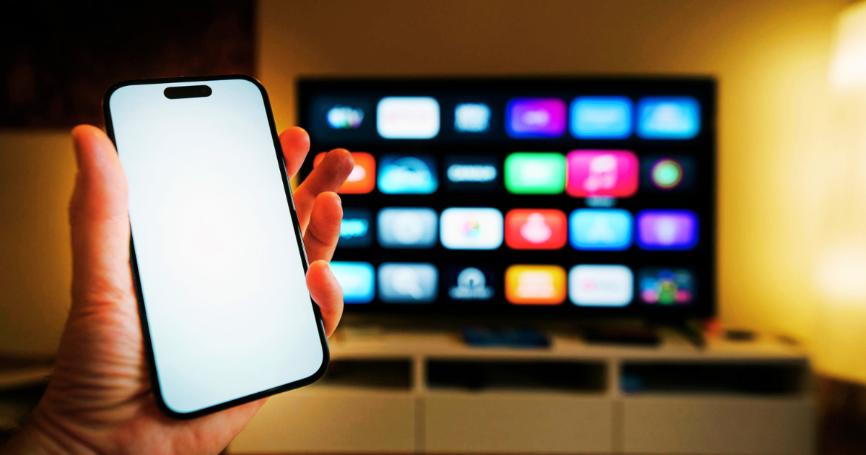

SIX everyday technologies that can predict your behavior, from streaming apps and social media to smartphones, shopping platforms, and smart devices.
Six Everyday Technologies That Secretly Predict Your Behavior
Technology does more than respond to what we do. Increasingly, it tries to predict what we will do next.
From the videos recommended on your phone to the smart devices in your home, algorithms can analyze patterns in our activity and use them to personalize what we see, hear, buy, or experience. Recommendation systems commonly use signals such as browsing history, purchases, and previous interactions to predict preferences.
This does not necessarily mean your devices are “reading your mind.” In most cases, they are identifying patterns from data you generate while using technology.
Here are six everyday technologies that can quietly predict your behavior.
1. Streaming Apps Predict What You Will Watch
Netflix, YouTube, Spotify, and similar platforms constantly learn from your interactions.
What you watch, skip, replay, search for, or finish can become a signal about your preferences.
Over time, recommendation algorithms can become surprisingly good at predicting what might keep your attention.
That is why two people opening the same streaming service can see completely different recommendations.
The interesting part: the technology may learn what you like before you consciously understand your own pattern.
2. Online Shopping Predicts What You Might Buy
Online stores don’t simply show products randomly.
Your searches, clicks, previous purchases, browsing behavior, and interactions can help recommendation systems estimate what products you may be interested in.
This can make shopping faster because relevant products appear without you having to search for everything yourself.
But it also means your previous behavior can influence what you see next.
A few clicks today could shape tomorrow’s recommendations.
3. Social Media Predicts What Will Keep You Scrolling
Social media platforms use recommendation systems to decide which posts, videos, and accounts appear in your feed.
The system can learn from signals such as what you watch, like, skip, share, or interact with.
The goal is personalization—but the result can also influence what you spend your time looking at.
Regulators and researchers have increasingly examined these systems because recommendation algorithms can affect people’s online experiences in both helpful and harmful ways.
Your feed isn’t simply showing you the internet. It’s showing you a prediction of what you are likely to engage with.
4. Smart Home Devices Learn Your Routines
Smart technology can become familiar with household routines.
A smart speaker, thermostat, lighting system, television, or other connected device may collect information about how and when it is used.
For example, connected devices can potentially identify recurring patterns around schedules, preferences, and usage.
The UK’s Information Commissioner’s Office highlighted this issue in 2026, noting that smart devices can collect significant amounts of personal information and that many users do not clearly understand how their data is collected and used.
The convenience is obvious—but so is the privacy question.
When a device learns your routine, it is also learning something about you.
5. Smartphones Can Predict Where You Are Going
Your smartphone constantly interacts with location-based services and applications.
Maps can estimate where you are heading. Calendar apps can recognize upcoming events. Travel applications can provide suggestions based on previous activity.
Individually, these features may seem ordinary.
Together, patterns in location and activity can provide surprisingly detailed information about your routines.
This is one reason privacy researchers continue to examine how smartphones and connected devices use location and behavioral data.
6. Fitness Technology Can Predict Your Habits
Smartwatches and fitness trackers don’t simply count steps.
They can collect information about activity, sleep patterns, exercise routines, and other aspects of daily behavior.
Machine-learning systems can then analyze sensor data to identify patterns in everyday activities. Recent research has highlighted how mobile and wearable sensors combined with AI can automatically detect aspects of human behavior.
This could make fitness technology more useful by providing personalized insights.
But it also creates an important question:
How much should a device know about your daily life?
The Technology Isn’t Reading Your Mind
It can sometimes feel like technology knows what you are going to do before you do it.
Usually, the reality is less mysterious.
Algorithms are extremely good at finding patterns in large amounts of data. If your previous behavior repeatedly leads to a particular action, a system can use that history to make a prediction.
The prediction may be wrong. But when millions of interactions are analyzed, even imperfect predictions can become useful.
That is what makes these technologies so powerful.
The Privacy Question
Personalization can make technology more convenient, but prediction also creates a privacy challenge.
The more data a system collects, the more accurately it may understand your habits and preferences. At the same time, users may not always know exactly what information is being collected or how it is being used. The UK’s ICO reported in 2026 that only 14% of surveyed UK adults had a clear understanding of how their smart devices collect and use personal data.
That makes transparency and meaningful privacy controls increasingly important.
The future may not simply be about technology responding to us.
It may be about technology anticipating us.
SixGlobe Takeaway
Your phone, streaming apps, shopping platforms, social feeds, smart home devices, and wearables can all use patterns in your behavior to personalize what happens next.
The most powerful technology may not be the one that knows what you did yesterday—it may be the one that makes a good guess about what you’ll do tomorrow.