Is the Ocean Really So Deep? Six Incredible Facts That Will Surprise You
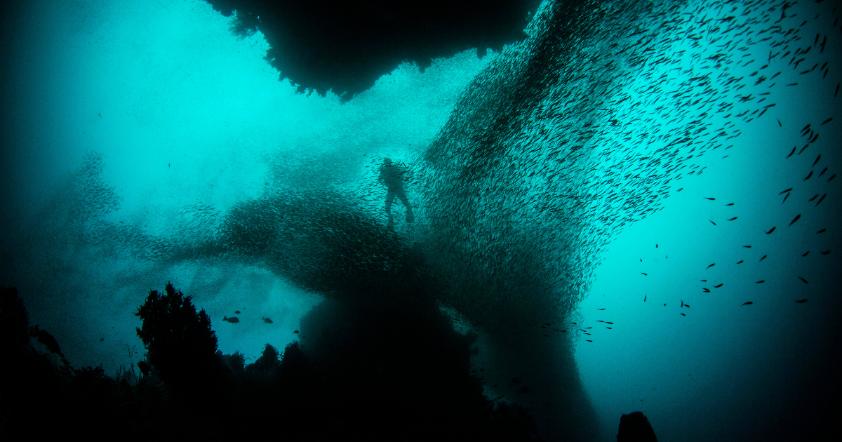
How deep is the ocean really? Discover six incredible facts about Earth’s oceans, from the Mariana Trench and crushing pressure to mysterious creatures and unexplored depths.
Is the Ocean Really So Deep? Six Incredible Facts That Will Surprise You
When you stand on a beach and look toward the horizon, it’s easy to think of the ocean as just a vast body of water stretching into the distance. But beneath the waves lies an entirely different world—one that is darker, colder, and far more mysterious than most people realize.
The Earth’s oceans cover about 71% of the planet’s surface, yet scientists estimate that more than 80% of them remain unexplored. While humans have walked on the Moon, much of the deep ocean is still unknown. Powerful underwater mountains, enormous trenches, strange creatures, and ecosystems that thrive without sunlight all exist beneath the surface.
So, is the ocean really as deep as people say? The answer is a resounding yes. In some places, the ocean is so deep that Mount Everest could fit inside it with room to spare. The pressure is so intense that it would crush an ordinary submarine in seconds, and sunlight never reaches these depths.
Here are six incredible facts that reveal just how astonishing Earth’s oceans truly are.
1. The Deepest Part of the Ocean Is Deeper Than Mount Everest Is Tall
The deepest known place in the world’s oceans is the Mariana Trench, located in the western Pacific Ocean. Within it lies Challenger Deep, which reaches a depth of nearly 11 kilometers (about 36,000 feet) below sea level.
To understand how deep that is, imagine placing Mount Everest—the tallest mountain on Earth—into the trench. Everest stands about 8.85 kilometers (29,032 feet) high, meaning its peak would still remain more than 2 kilometers underwater if it were placed at the bottom of Challenger Deep.
Reaching such depths is incredibly difficult. Only a handful of crewed expeditions have successfully visited Challenger Deep because the conditions are among the harshest anywhere on Earth.
These trenches form where one tectonic plate slides beneath another, a process known as subduction. Over millions of years, this movement creates enormous underwater valleys that become the deepest parts of the planet.
2. The Pressure at the Bottom Is Almost Impossible to Imagine
As divers descend beneath the ocean’s surface, water pressure increases rapidly. For every 10 meters (33 feet) of depth, the pressure increases by roughly one atmosphere.
At Challenger Deep, the pressure exceeds 1,000 times the atmospheric pressure at sea level. This is equivalent to having dozens of jumbo jets pressing down on a single person.
Such pressure would instantly destroy most ordinary equipment. Scientists must design specialized deep-sea submersibles using extremely strong materials such as titanium and thick pressure-resistant spheres to survive these conditions.
Even modern exploration vehicles require years of engineering and testing before they can safely operate in the deepest parts of the ocean.
3. Strange Creatures Thrive Where Sunlight Never Reaches
Below approximately 200 meters (656 feet), sunlight begins to disappear. Beyond 1,000 meters, the ocean enters a realm of permanent darkness known as the midnight zone.
Despite the absence of sunlight, life flourishes.
Some deep-sea fish produce their own light through a process called bioluminescence. Anglerfish use glowing lures to attract prey, while jellyfish and squid create dazzling displays to communicate or confuse predators.
Other creatures have evolved transparent bodies, enormous mouths, expandable stomachs, or oversized eyes to survive in an environment with limited food and complete darkness.
Scientists continue discovering new species during nearly every major deep-sea expedition, proving that the ocean still holds countless biological surprises.
4. The Ocean Contains Massive Underwater Mountains and Volcanoes
Many people imagine the ocean floor as flat and featureless. In reality, it is one of the most rugged landscapes on Earth.
Hidden beneath the water are enormous mountain ranges, deep valleys, volcanoes, and vast plateaus.
The Mid-Ocean Ridge is the world’s longest mountain chain, stretching for approximately 65,000 kilometers (40,000 miles) around the globe. Most of this enormous geological feature remains underwater.
Thousands of underwater volcanoes continuously reshape the seafloor. Some eventually grow tall enough to emerge above sea level, forming islands such as Hawaii and Iceland.
Hydrothermal vents near these volcanic regions release mineral-rich water heated by Earth’s interior. These vents support entire ecosystems that depend not on sunlight, but on chemicals released from the Earth’s crust.
5. Scientists Have Explored Less Than You Might Think
Despite remarkable advances in technology, the deep ocean remains one of humanity’s least explored frontiers.
Experts estimate that more than 80% of the global ocean has not yet been fully mapped, explored, or observed.
The challenge is enormous. The ocean covers more than 361 million square kilometers, making it difficult and expensive to study. Deep-sea expeditions require specialized ships, advanced sonar systems, remotely operated vehicles, and highly trained researchers.
Every year, scientists discover previously unknown marine species, underwater canyons, coral reefs, and geological formations.
Some researchers believe millions of undiscovered organisms may still inhabit the deep ocean, many of which could help advance medicine, biotechnology, and our understanding of life on Earth.
6. The Deep Ocean Plays a Vital Role in Life on Earth
The ocean is far more than a vast body of water—it is one of the planet’s most important life-support systems.
It produces around half of the oxygen we breathe through microscopic marine plants known as phytoplankton. These tiny organisms use sunlight to produce oxygen and absorb carbon dioxide from the atmosphere.
The oceans also regulate Earth’s climate by storing enormous amounts of heat and transporting it around the globe through powerful ocean currents.
Deep ocean ecosystems help recycle nutrients, store carbon for long periods, and support marine food chains that feed billions of people worldwide.
Even though humans rarely see these deep environments, they play a crucial role in maintaining the health of the entire planet.
Why the Deep Ocean Still Fascinates Scientists
The deep sea remains one of science’s greatest mysteries. Researchers continue developing advanced robots, autonomous submarines, and high-resolution mapping systems to explore areas that have never been visited.
Every expedition reveals something unexpected—whether it is a new species, an unusual geological feature, or evidence that life can survive in conditions once thought impossible.
Scientists believe understanding the deep ocean could improve weather forecasting, climate research, earthquake monitoring, and even the search for life beyond Earth. Some extreme environments beneath the sea resemble conditions that may exist on icy moons such as Europa or Enceladus.
Conclusion
So, is the ocean really so deep?
Absolutely.
Its deepest trenches extend farther than the height of Mount Everest, its crushing pressure challenges the limits of engineering, and its permanent darkness shelters extraordinary creatures unlike anything found on land. Beneath the waves lies a world of underwater mountains, active volcanoes, and ecosystems that continue to surprise scientists with every expedition.
Although humanity has learned a great deal about the oceans, we have only scratched the surface. The deep sea remains one of the last great frontiers on Earth—a place filled with mystery, discovery, and scientific wonder.
The next time you look out across the ocean, remember that beneath those calm blue waters lies an immense hidden world waiting to be explored.
Follow SixGlobe for more fascinating articles about science, nature, history, technology, space, and the incredible wonders of our planet.
Thank you 🙂














Post Comment