Six Car Technologies That Sound Fake—But Already Exist
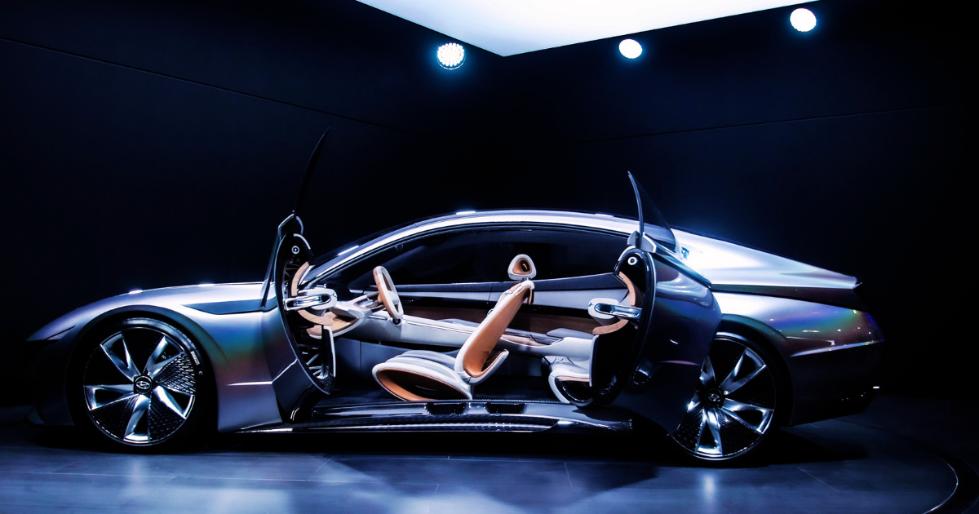
From cars that move sideways to vehicles that power homes, discover six incredible automotive technologies that sound fake—but are already real.
Six Car Technologies That Sound Fake—But Already Exist
If someone had told you twenty years ago that a car could move diagonally, recognize your face, or supply electricity to your home, you probably would have laughed.
Yet modern automobiles are no longer just machines with engines and wheels. They are becoming intelligent computers on wheels, combining artificial intelligence, advanced sensors, high-speed connectivity, and innovative engineering to perform tasks that once seemed impossible.
Some of these technologies are already available in production vehicles, while others are rolling out in select markets. Although they may sound like science fiction, they represent the next generation of transportation.
Here are six car technologies that sound fake—but already exist.
1. Cars That Can Move Sideways
Parallel parking has frustrated drivers for generations. Some modern electric vehicles have found an unexpected solution.
Using advanced four-wheel steering, certain vehicles can rotate all four wheels in the same direction, allowing the car to move diagonally. This feature, often called “CrabWalk,” helps drivers navigate tight spaces and difficult off-road terrain.
Instead of turning in the traditional way, the vehicle glides sideways while maintaining forward orientation.
While currently available only on selected models, the technology demonstrates how engineers are rethinking vehicle movement itself.
SixGlobe Verdict
Reality Check: ✅ It looks impossible until you see it in action.
2. Cars That Can Recognize Your Face
Many modern smartphones unlock after recognizing your face. Some cars are beginning to do something similar.
Driver-monitoring systems use cameras to identify the person behind the wheel, adjust seat position, mirrors, climate settings, and even preferred entertainment options automatically.
More importantly, these systems continuously monitor eye movements, blinking patterns, and head position. If they detect signs of fatigue or distraction, they can alert the driver before a dangerous situation develops.
Future versions may even identify medical emergencies.
SixGlobe Verdict
Reality Check: ✅ Your car may know you’re tired before you do.
3. Cars That Can Power Your House
Electric vehicles are no longer just consumers of electricity—they can also become energy sources.
Vehicle-to-Home (V2H) technology allows compatible electric cars to supply electricity back to a house during power outages or periods of high electricity demand.
Instead of sitting idle in the garage, the battery can temporarily power lights, refrigerators, computers, and other essential appliances.
As renewable energy becomes more common, many experts believe cars could eventually become important parts of home energy systems.
SixGlobe Verdict
Reality Check: ✅ Your next backup generator could be parked in your driveway.
4. Cars That Can See Underneath Themselves
Driving over rocks, curbs, or uneven ground can be difficult because drivers cannot see directly beneath the front of the vehicle.
Some manufacturers have solved this problem using multiple cameras and software that creates a virtual transparent view of the hood.
The system stitches together camera feeds to display what appears to be the ground underneath the vehicle, helping drivers avoid obstacles that would normally remain hidden.
Although the hood itself doesn’t become transparent, the illusion is remarkably convincing.
SixGlobe Verdict
Reality Check: ✅ The hood isn’t invisible—but technology makes it feel that way.
5. Cars That Can Talk to Other Cars
Imagine your car receiving a warning about an accident before it comes into view.
Vehicle-to-Vehicle (V2V) communication allows compatible vehicles to exchange information such as sudden braking, slippery roads, traffic conditions, or approaching emergency vehicles.
Rather than relying only on cameras or radar, the car receives information directly from nearby vehicles.
As more vehicles adopt this technology, roads could become significantly safer.
SixGlobe Verdict
Reality Check: ✅ Cars are beginning to communicate like smartphones.
6. Cars That Improve After You Buy Them
For decades, buying a car meant its features remained largely unchanged unless you visited a service center.
Today, many software-driven vehicles receive over-the-air updates that improve performance, fix software bugs, enhance safety systems, or even unlock entirely new capabilities.
In some cases, owners wake up to discover that their vehicle has become smarter overnight.
The idea of a car evolving after purchase would have seemed unbelievable just a generation ago.
SixGlobe Verdict
Reality Check: ✅ Modern cars can continue improving long after leaving the showroom.
SixGlobe Reality Check
| Technology | Sounds Fake? | Already Exists? |
|---|---|---|
| Sideways driving (CrabWalk) | ✅ Yes | ✅ Yes |
| Facial recognition & driver monitoring | ✅ Yes | ✅ Yes |
| Vehicle-to-Home power | ✅ Yes | ✅ Yes |
| Transparent hood camera view | ✅ Yes | ✅ Yes |
| Vehicle-to-Vehicle communication | ✅ Yes | ✅ Yes |
| Over-the-air software upgrades | ✅ Yes | ✅ Yes |
Why This Matters
The automobile industry is changing faster than ever before. Modern vehicles increasingly combine software, artificial intelligence, connectivity, and advanced engineering to solve problems that traditional mechanical systems never could.
Many of these technologies improve safety, convenience, and efficiency. Others are laying the foundation for fully connected transportation systems in which vehicles communicate with each other, infrastructure, and even the electrical grid.
What seems extraordinary today could become standard equipment within the next decade.
Conclusion
Cars have evolved far beyond their original purpose of simply transporting people from one place to another. They can recognize drivers, move in unexpected ways, communicate with nearby vehicles, power homes, and improve through software updates.
The most surprising part isn’t that these technologies exist—it’s that many people don’t realize they’re already here.
As automotive innovation accelerates, the line between science fiction and everyday driving continues to disappear.
Follow SixGlobe for more fascinating articles exploring breakthrough technologies, engineering innovations, and the future of transportation.
SixGlobe Takeaways
- Modern cars are becoming intelligent platforms, combining software, AI, and advanced sensors.
- Sideways-driving technology demonstrates how vehicle movement is being reimagined for difficult driving situations.
- Driver-monitoring systems can improve safety by detecting distraction and fatigue.
- Electric vehicles are evolving into energy storage systems, capable of supporting homes during outages.
- Connected vehicles can exchange information to improve road awareness and safety.
- Software updates mean some cars become more capable over time, changing the traditional idea of vehicle ownership.














Post Comment