Six Automobile Brands That Disappeared Overnight
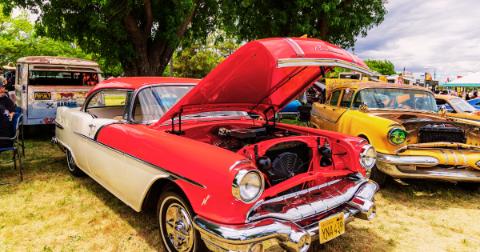
What happened to famous car brands that once had millions of fans? Discover six automobile brands that vanished after bankruptcy, acquisitions, declining sales, or changing markets.
Six Automobile Brands That Disappeared Overnight
The automobile industry is full of brands that once seemed impossible to lose. They built popular cars, developed loyal customers, and competed against some of the biggest names in the world.
Yet the automotive market can change brutally fast. Financial problems, poor decisions, failed products, mergers, and changing consumer preferences have caused even recognizable automobile brands to disappear.
Some vanished within a few years. Others disappeared so suddenly that drivers were left wondering what happened.
Here are six automobile brands that are no longer part of the mainstream automotive world.
1. Pontiac
Pontiac was once one of America’s most recognizable performance-oriented car brands.
Owned by General Motors, Pontiac became famous for models such as the Firebird, GTO, and Grand Prix. The brand developed a strong identity around sporty styling and performance.
But the 2008 financial crisis severely affected General Motors. As the company restructured, it decided to eliminate several brands and concentrate resources on its strongest names.
Pontiac produced its final vehicles in 2010.
Today, cars such as the Firebird and GTO remain highly collectible, keeping the Pontiac name alive among enthusiasts even though new Pontiacs are no longer produced.
2. Saab
Saab was never an ordinary car company.
The Swedish brand became known for unusual engineering, distinctive styling, turbocharged engines, and aviation-inspired design. Models such as the Saab 900 developed an unusually loyal following.
But Saab struggled financially for years. After General Motors acquired full ownership and later attempted to sell the brand, Saab eventually filed for bankruptcy in 2011.
Production stopped, and one of the automotive industry’s most distinctive brands disappeared from the new-car market.
Saab’s influence, however, remains visible among enthusiasts who still appreciate its unconventional approach to automobile design.
3. Oldsmobile
Oldsmobile’s story is particularly surprising because it was one of America’s oldest automobile brands.
Founded in 1897, Oldsmobile became a major name under General Motors. The brand introduced numerous innovations over its long history and produced models that became household names.
But by the late 20th century, Oldsmobile’s identity had become less distinctive. Sales declined, and General Motors eventually decided to discontinue the brand.
The final Oldsmobile, an Alero, left the production line in 2004.
A brand that had survived for more than a century was suddenly gone.
4. Mercury
Mercury occupied an interesting position inside Ford’s lineup.
It was positioned between Ford’s mainstream vehicles and Lincoln’s luxury products, offering customers something more upscale without moving fully into the luxury segment.
However, changing consumer preferences and increasing overlap between Ford and Mercury models made the brand increasingly difficult to justify.
Ford announced the end of Mercury in 2010, with production ending later that year.
The Mercury name had existed for more than seven decades—but eventually became another casualty of corporate consolidation.
5. Daewoo
Daewoo became a major automobile name in South Korea and expanded internationally during the 1990s.
The company produced affordable cars that were sold in numerous markets. In some countries, Daewoo became a familiar alternative to established Japanese and European brands.
However, the Asian financial crisis severely affected Daewoo Group. The automobile division eventually went bankrupt and was acquired by General Motors.
The Daewoo brand gradually disappeared from many markets as its vehicles were rebranded under Chevrolet and other GM names.
So while many Daewoo cars continued to exist, the badge itself largely vanished.
6. Plymouth
Plymouth was created by Chrysler as an affordable American automobile brand.
For decades, it produced popular models ranging from family cars to performance machines. The Plymouth Road Runner, Barracuda, and Voyager became particularly memorable.
But Chrysler eventually began consolidating its brands. Plymouth increasingly competed with Chrysler and Dodge models rather than occupying a clearly defined market position.
Chrysler discontinued Plymouth in 2001.
The decision effectively ended a brand that had played an important role in America’s automobile history for more than 70 years.
Why Do Car Brands Disappear?
A famous badge doesn’t guarantee survival.
Automobile companies operate in an industry where development costs are enormous, competition is intense, and consumer preferences change rapidly. A brand can lose its identity, overlap with another brand in the same corporate group, or simply become too expensive to maintain.
Mergers and acquisitions can also make brands disappear even when their cars continue to exist. Sometimes the company survives while the name on the hood doesn’t.
Conclusion
The disappearance of these brands is a reminder that the automotive industry is constantly reshaping itself.
Pontiac, Saab, Oldsmobile, Mercury, Daewoo, and Plymouth once had dedicated customers and recognizable identities. Today, you can find their cars at classic-car events, enthusiast gatherings, and used-car markets—but you can’t walk into a dealership and buy a new one.
And that’s what makes automobile history so fascinating: the biggest brands on the road today aren’t guaranteed to be there tomorrow.
SixGlobe Takeaway
A car brand can spend decades building its reputation—and still disappear within a few years. In the automobile industry, nothing is permanent, not even a legendary badge.













Post Comment