Six Semiconductor Startups Shaping the Future of AI in 2026
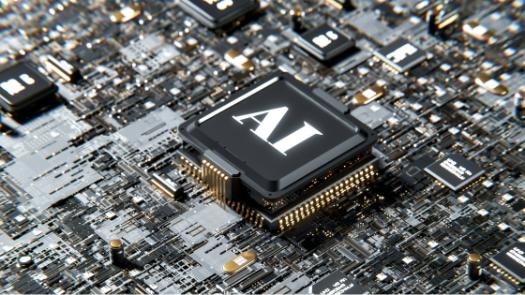
Artificial intelligence is driving unprecedented demand for faster, more efficient chips, creating opportunities for a new generation of semiconductor startups. While industry leaders continue to dominate manufacturing, emerging companies are introducing innovative technologies that could redefine AI computing, data centers, communications, and edge devices.
The semiconductor industry is experiencing one of its fastest innovation cycles in decades, fueled by AI, high-performance computing, and advanced networking. From optical interconnects to custom AI processors, these six startups are attracting attention for their potential to shape the future of computing.
1. Ayar Labs – Replacing Electrical Connections with Light
One of the most closely watched semiconductor startups, Ayar Labs is pioneering optical interconnect technology that uses light instead of traditional electrical signals to move data between chips.
Why it matters
- Reduces power consumption in AI data centers.
- Increases data transfer speeds significantly.
- Helps overcome bandwidth limitations in large AI clusters.
- Backed by major technology companies and investors.
As AI models continue growing in size, optical chip connectivity could become essential for next-generation computing infrastructure.
2. Celestial AI – Accelerating AI Through Photonic Computing
Celestial AI is developing photonic technology designed to improve communication between processors and memory.
Why it matters
- Enables faster AI training and inference.
- Reduces latency in AI workloads.
- Improves energy efficiency for hyperscale data centers.
- Addresses one of AI’s biggest bottlenecks: data movement.
Its focus on photonic fabric technology has positioned it among the fastest-growing AI hardware startups.
3. Groq – Purpose-Built AI Inference Processors
Unlike companies building general-purpose GPUs, Groq develops processors specifically optimized for AI inference.
Why it matters
- Delivers predictable low-latency AI responses.
- Supports real-time AI applications.
- Simplifies AI deployment for enterprises.
- Targets growing demand for generative AI services.
Groq has gained attention for enabling faster AI model execution while improving efficiency.
4. d-Matrix – Reinventing AI Inference Hardware
d-Matrix focuses on AI inference chips built specifically for large language models and generative AI applications.
Why it matters
- Optimized for enterprise AI workloads.
- Reduces power requirements compared to traditional architectures.
- Designed for scalable deployment in cloud environments.
- Helps businesses lower AI infrastructure costs.
Its architecture aims to address the growing demand for efficient AI inference at scale.
5. SiMa.ai – Bringing AI to Edge Devices
While many startups focus on cloud computing, SiMa.ai specializes in machine learning processors for edge AI.
Why it matters
- Powers industrial automation.
- Supports autonomous machines and robotics.
- Enables smart manufacturing.
- Improves AI processing without relying on cloud connectivity.
Edge AI is becoming increasingly important as industries seek real-time intelligence closer to devices.
6. EnCharge AI – Making AI More Energy Efficient
EnCharge AI is developing analog AI accelerators designed to perform AI computations with dramatically lower energy consumption.
Why it matters
- Reduces electricity usage for AI computing.
- Improves AI performance per watt.
- Supports sustainable AI infrastructure.
- Enables efficient AI deployment across multiple industries.
Energy-efficient computing is expected to become one of the industry’s biggest competitive advantages as AI adoption expands.
Why These Startups Matter
Several trends are driving rapid innovation across the semiconductor startup ecosystem:
- Explosive growth in generative AI.
- Increasing demand for AI infrastructure.
- Need for faster data movement.
- Greater emphasis on energy efficiency.
- Expansion of AI into edge computing and industrial applications.
Rather than competing directly with established chip manufacturers, many startups are solving specialized challenges that traditional architectures struggle to address.
Challenges Ahead
Despite their promising technologies, semiconductor startups face significant hurdles:
- High research and development costs.
- Complex chip manufacturing processes.
- Long product development cycles.
- Intense competition from established companies.
- Dependence on global semiconductor supply chains.
Success will depend on turning innovative designs into commercially viable products that can scale across industries.
Conclusion
The AI revolution is creating opportunities far beyond established semiconductor giants. Startups like Ayar Labs, Celestial AI, Groq, d-Matrix, SiMa.ai, and EnCharge AI are tackling some of the industry’s biggest technical challenges—from optical communications and AI inference to energy-efficient computing and edge intelligence. While not every startup will emerge as a market leader, their innovations are likely to influence the next generation of AI hardware and shape the future of semiconductor technology.
Follow SixGlobe
Want to stay ahead of the latest AI, startup, and technology trends? Follow SixGlobe for concise, easy-to-read articles that break down complex topics into six key insights.














Post Comment