Six Strange Meteors That Shouldn’t Exist—But Do
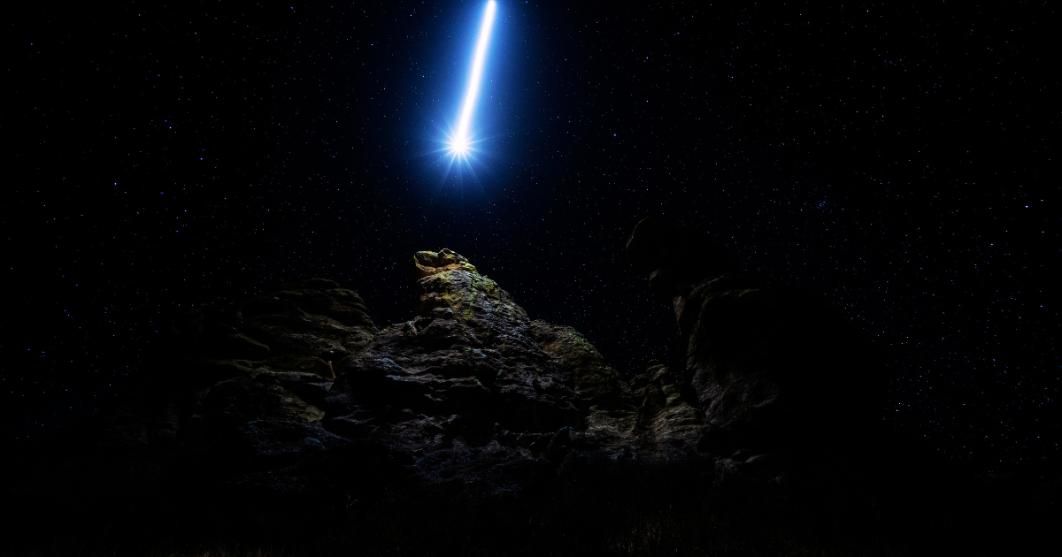
Six strange meteorites reveal diamonds, Martian rocks, ancient stardust and other cosmic secrets that challenge what we know about space.
Six Strange Meteors That Shouldn’t Exist—But Do
Space is full of objects that seem to follow the rules of physics perfectly. But every once in a while, scientists discover a meteorite that makes those rules look far more complicated.
Some contain minerals that form only under extreme pressure. Others appear to have come from worlds that no longer exist. A few even contain materials or structures that scientists once thought were impossible in nature.
Here are six strange meteorites that show just how weird our cosmic neighborhood can be.
1. The Meteorite With Minerals Born Under Extreme Pressure
Some meteorites contain minerals that normally form deep inside planets under enormous pressure.
Scientists have discovered high-pressure minerals such as bridgmanite and ringwoodite in meteorites created by violent impacts. These minerals provide clues about what happens inside planets when asteroids collide at incredible speeds.
The surprising part is that these minerals can survive the journey to Earth, preserving evidence of ancient cosmic collisions.
In other words, a tiny rock can contain a microscopic record of an explosion powerful enough to reshape an asteroid.
2. The Meteorite That Came From Mars
Meteorites don’t always come from asteroids.
Scientists have identified meteorites that originated on Mars. A massive impact on the Martian surface can launch pieces of Martian rock into space. Some of those fragments eventually cross Earth’s path and fall here.
Researchers can identify their Martian origin through their chemical composition and trapped gases.
That means scientists can study pieces of Mars in laboratories without having to travel there.
Even more fascinating, some Martian meteorites have helped scientists investigate whether Mars once had environments capable of supporting microbial life.
3. The Meteorite That Contains Diamonds
Diamonds aren’t exclusive to Earth.
Some meteorites contain tiny diamonds formed under extraordinary pressure. One particularly interesting group is ureilite meteorites, which can contain microscopic diamonds and other unusual carbon-rich materials.
Scientists believe at least some of these diamonds formed during enormous collisions involving their parent bodies.
The diamonds aren’t valuable gemstones. They’re valuable scientific evidence.
Their microscopic structures can reveal how violently the meteorite’s parent body was destroyed billions of years ago.
4. The Meteorite That Came From an Asteroid Destroyed in Space
Some meteorites appear to preserve evidence from bodies that no longer exist.
Imagine an ancient asteroid being smashed apart by a catastrophic collision. Most of its material becomes scattered through space, but fragments can eventually reach Earth.
Meteorites can therefore act like cosmic fossils.
By studying their minerals and chemical signatures, scientists can reconstruct parts of the history of their long-lost parent bodies.
In some cases, researchers are effectively studying the remains of worlds that disappeared billions of years ago.
5. The Meteorite With Materials That Formed Before the Solar System
This may be one of the strangest discoveries of all.
Some meteorites contain tiny grains called presolar grains. These particles existed before our Solar System formed about 4.6 billion years ago.
They survived the violent process that created the Sun, planets and asteroids and became trapped inside meteorites.
Scientists can analyze their isotopic compositions to determine which stars produced them.
So when researchers examine certain meteorites, they aren’t simply looking at ancient rocks.
They’re examining microscopic pieces of stars that existed before the Sun was born.
6. The Meteorite That May Reveal the Ingredients of Early Life
Some meteorites contain complex organic molecules, including amino acids and other carbon-based compounds.
This doesn’t mean that scientists have found extraterrestrial life.
But it does show that important chemical ingredients associated with life can form naturally in space.
Carbon-rich meteorites, particularly primitive carbonaceous chondrites, preserve some of the oldest chemical material available for scientists to study.
Their chemistry has helped researchers investigate an enormous question:
Could some of the ingredients needed for life have arrived on early Earth from space?
We still don’t have a definitive answer. But meteorites give scientists an extraordinary laboratory for investigating how chemistry evolved before life appeared.
The Bigger Mystery
The strangest thing about meteorites isn’t that they’re unusual rocks.
It’s that some of them contain evidence of places, collisions and stars that disappeared billions of years ago.
A meteorite sitting inside a museum or laboratory can contain minerals created during planetary destruction, material from Mars, diamonds produced by violent impacts, or grains older than the Sun itself.
And there are likely many more strange objects still waiting to be discovered.
Conclusion
Meteorites are more than pieces of space debris.
They are fragments of cosmic history. Each one can preserve clues about ancient planets, destroyed asteroids, distant stars and the chemistry of the early Solar System.
The next time you see a meteor streak across the night sky, remember: the object behind that flash might be carrying a story that began billions of years before Earth even existed.













Post Comment