Six Ways Geopolitics Is Quietly Rewriting Global Business in 2026
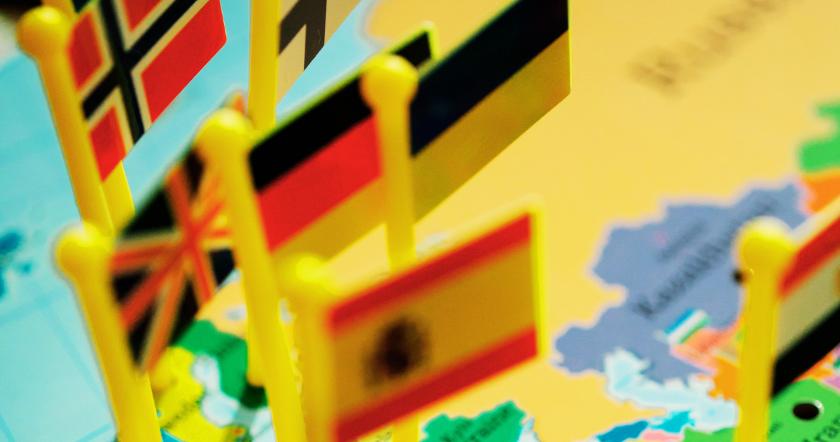
Tariffs, supply chain chaos, and trade wars are reshaping how companies do business in 2026. Here are six ways geopolitics is quietly changing the global economy.
Six Ways Geopolitics Is Quietly Rewriting Global Business in 2026
A few years ago, “geopolitics” was one of those words you’d hear on the news and tune out. It sounded like something diplomats argued about in fancy buildings while the rest of us went about our day.
Not anymore.
In 2026, geopolitics has crashed into the corporate boardroom with a vengeance. And it’s not just the big multinationals feeling it. If you run a business that imports anything, exports anything, or relies on materials from overseas, you’re probably already living through it.
One new tariff can spike your costs overnight. A conflict near a major shipping lane can hold your products hostage for weeks. A technology restriction can force you to rethink where you even build your factory.
The old rule—find the cheapest supplier and call it a day—is dead.
The World Trade Organization recently warned that global merchandise trade is under serious pressure from geopolitical tensions and shifting trade policies. UN Trade and Development projects real merchandise trade growth will only hit 1.5% to 2.5% in 2026. Compare that to 4.7% in 2025. That’s a massive slowdown.
Governments everywhere are using tariffs, subsidies, export bans, and industrial policy to meddle with where and how businesses produce things. And companies are scrambling to keep up.
Here are six ways this is quietly rewriting the rules of global business.
1. The Cheapest Supplier Isn’t Always the Best Anymore
For like, 30 years, the formula was simple: find the lowest-cost factory anywhere in the world, sign the contract, and ship products back home. End of story.
That era is ending.
Sure, that factory halfway across the world might still be cheaper on paper. But what happens when a tariff suddenly adds 25% to your cost? What happens when an export restriction cuts off your supply entirely? What happens when a shipping disruption delays your containers by three weeks?
Suddenly, “cheap” doesn’t look so cheap anymore.
Companies are now obsessed with resilience. They’re looking at suppliers and asking: can we actually count on this country long-term?
U.S. tariff policies have already pushed many companies to shift sourcing away from China and toward places like Mexico. Harvard Business School research confirms this trend—imports are moving, slowly but surely.
That doesn’t mean China is out of the picture. Far from it. But companies are starting to build alternatives. They’re asking themselves a brutally simple question:
“What if our most important supplier just… disappeared?”
That question is worth billions of dollars. And nobody wants to be the one without an answer.
2. Tariffs Aren’t Just Policy Anymore—They’re Strategy
Tariffs used to be something you read about in the newspaper and shrugged at. Now they’re a core part of corporate planning.
Allianz’s July 2026 analysis put the global average U.S. tariff rate at around 12.4%. That’s a mix of different tariff regimes and bilateral deals. But here’s the thing: it keeps changing.
Just this August, the U.S. announced new tariffs on imported drones and components. Some Chinese military-capable drones now face a 100% tariff. Others face lower rates, but there are also incentives baked in to encourage domestic production.
See what’s happening here?
Tariffs aren’t just about protecting local industries anymore. They’re being used for national security and industrial policy. Governments are picking winners and losers, and businesses have to adapt—fast.
For a company, that means a policy announcement in Washington can suddenly become a factory-closing decision in another part of the world. That’s wild. And it’s the new normal.
3. The “China + 1” Strategy Is Everywhere
You’ve probably heard this term by now: “China + 1.” It means keeping your manufacturing base in China but adding another country to the mix—just in case.
Vietnam. India. Mexico. Thailand. These places are booming as companies try to spread their risk.
But here’s the catch: you can’t just snap your fingers and move production. A new factory needs suppliers. It needs skilled workers. It needs transportation networks, ports, and a whole supporting ecosystem. That stuff takes years to build.
Still, the direction is clear. Companies increasingly want multiple countries capable of producing the same critical product. It’s expensive. It’s complicated. But after a few years of supply-chain chaos, redundancy is finally starting to look like a smart investment rather than a waste of money.
4. Shipping Routes Have Become Corporate Lifelines
You can have the best factory in the world. You can have the cheapest materials. But if your goods can’t reach your customers, none of it matters.
That’s why shipping chokepoints are suddenly a huge deal for businesses.
The Red Sea disruptions threw global shipping into chaos, forcing companies to reroute between Asia and Europe. Instability around major waterways keeps freight costs volatile. Insurance rates spike. Fuel consumption goes up. Delays force companies to hold more inventory—which costs money.
And eventually, all those extra costs get passed on to you and me. That bottle of olive oil? That electronic gadget? A conflict thousands of kilometers away can actually make it more expensive on the shelf.
Crazy, right? But that’s the world we live in now.
5. Technology Has Become a Geopolitical Weapon
Semiconductors. AI. 5G. Drones. Advanced manufacturing tools.
These aren’t just products anymore. They’re strategic assets. Governments treat them like national-security infrastructure, not consumer goods.
The U.S. drone tariff decision we mentioned earlier? It’s not really about drones. It’s about reducing dependence on Chinese technology and keeping sensitive capabilities domestic.
The result is a fragmented tech landscape. Companies can’t just build the best product and sell it everywhere anymore. They have to ask:
“Can we legally buy this?”
“Can we sell this in that country?”
“Is this technology restricted anywhere?”
For semiconductor companies, cloud providers, automakers, and AI businesses, those questions are becoming just as important as the technology itself.
6. Governments Are Essentially Part of Your Supply Chain Now
This might be the biggest shift of all.
Governments aren’t just setting rules and stepping back anymore. They’re actively involved. Subsidies. Tariffs. Export controls. Local-content requirements. Strategic investment programs. All of it shapes which companies win and which ones struggle.
The World Economic Forum reported in August that 2026 has seen a surge in trade-policy interventions. Tariffs, restrictions, subsidies—they’re everywhere.
So what does that mean for business?
You can have an amazing product. You can have the best pricing. But if a government changes the rules, none of that guarantees success.
That’s why major corporations are now hiring geopolitical analysts and trade specialists alongside traditional business strategists. Understanding politics is becoming just as important as understanding markets.
The New Bottom Line: Efficiency Just Isn’t Enough
For decades, globalization was about one thing: efficiency. Find the cheapest labor, the cheapest materials, the fastest logistics, and cash in.
That era is over.
Companies still want efficiency, sure. But now they also want resilience. Flexibility. Political security. It’s not about winning on price alone anymore. It’s about surviving whatever chaos comes next.
A slightly more expensive supplier in a stable country might be safer than a cheaper one in a geopolitical hot spot. A second factory in another country might be expensive, but it’s insurance against disaster. A longer shipping route costs more—but sometimes it’s the only one available.
The lines between geopolitics and business have blurred. Maybe they were never really separate in the first place. We’re just finally paying attention.
The next major corporate crisis probably won’t start inside a company. It’ll start with a government announcement, a border dispute, a shipping blockade, or a new trade restriction.
In 2026, knowing where the world is heading politically is just as important as knowing where the market is heading economically.














Post Comment