Six Places on Earth That Look Like Another Planet: How Did They Form?
From salt deserts to colorful volcanic landscapes, discover six incredible places on Earth that look like another planet—and learn the fascinating science behind how they formed.
Six Places on Earth That Look Like Another Planet: How Did They Form?
Six Places on Earth That Look Like Another Planet: How Did They Form?
Meta Description:
From salt deserts to colorful volcanic landscapes, discover six incredible places on Earth that look like another planet—and learn the fascinating science behind how they formed.
SEO Focus Keyword: Places on Earth That Look Like Another Planet
URL Slug: places-on-earth-that-look-like-another-planet
Introduction
If someone showed you photographs of certain places on Earth without telling you where they were taken, you might guess Mars, the Moon, or even a distant alien world.
Surprisingly, these extraordinary landscapes are right here on our own planet. Over millions of years, volcanic eruptions, shifting tectonic plates, erosion, mineral deposits, glaciers, and extreme weather have sculpted environments so unusual that scientists often use them to study conditions found on other planets.
These destinations are not only breathtaking for travelers but also valuable natural laboratories that help researchers understand the history of Earth and prepare for future space exploration.
Here are six places on Earth that look like another planet—and the remarkable science behind how they formed.
1. Salar de Uyuni, Bolivia – Earth’s Giant Mirror
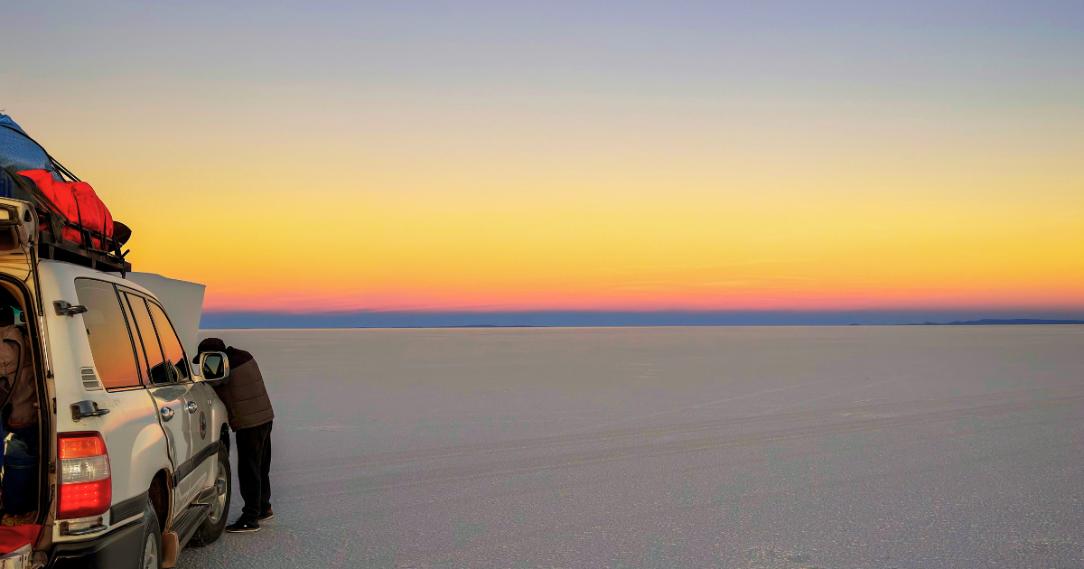
During the rainy season, the world’s largest salt flat transforms into a perfect natural mirror, creating the illusion that the sky and Earth have merged into one endless horizon.
Millions of years ago, this region was covered by enormous prehistoric lakes. As the climate changed, the lakes gradually evaporated, leaving behind vast deposits of salt. Today, Salar de Uyuni stretches across more than 10,000 square kilometers, making it the largest salt flat on Earth.
Scientists also value the region because it contains one of the world’s largest known lithium reserves, an essential material for rechargeable batteries.
SixGlobe Verdict
Reality Check: It looks digitally edited, but it’s entirely natural.
2. The Atacama Desert, Chile – A Landscape That Resembles Mars
Some parts of the Atacama Desert receive so little rainfall that they are considered among the driest places on Earth.
The combination of extreme dryness, volcanic terrain, intense sunlight, and mineral-rich soil creates a landscape remarkably similar to Mars. Because of these similarities, space agencies have tested robotic equipment here before sending missions to the Red Planet.
The desert’s harsh conditions also make it one of the best places in the world for astronomical observation, thanks to its clear skies and minimal light pollution.
SixGlobe Verdict
Reality Check: If you want to know what Mars might feel like, this is one of the closest experiences on Earth.
3. Zhangye Danxia, China – Mountains Painted by Nature
The colorful hills of Zhangye Danxia appear almost too vibrant to be real.
Their striking red, yellow, orange, and green bands formed over millions of years as layers of sandstone and minerals accumulated. Later, movements of Earth’s tectonic plates pushed these layers upward, while wind and rain gradually carved the dramatic ridges visible today.
Far from being painted, every color represents different minerals deposited across vast stretches of geological time.
SixGlobe Verdict
Reality Check: Nature spent millions of years creating what looks like a giant work of art.
4. Dallol, Ethiopia – One of Earth’s Most Extreme Landscapes
Bright green pools, vivid yellow mineral formations, steaming vents, and acidic springs give Dallol an appearance unlike almost anywhere else on Earth.
Located within the Danakil Depression, this geothermal region sits above volcanic activity. Hot groundwater rises through underground minerals, creating colorful deposits of sulfur, iron, and salt.
Temperatures regularly exceed 40°C, making it one of the hottest inhabited regions on the planet.
Scientists study Dallol because its extreme environment may offer clues about how life could survive in harsh conditions elsewhere in the Solar System.
SixGlobe Verdict
Reality Check: It looks like an alien world—but it’s one of Earth’s most extraordinary geological laboratories.
5. White Desert, Egypt – Sculptures Created by Wind
The White Desert is famous for its brilliant white rock formations that resemble giant mushrooms, animals, and frozen waves.
Millions of years ago, this area lay beneath an ancient sea. As the water disappeared, thick chalk and limestone deposits remained behind. Over countless centuries, powerful desert winds slowly sculpted these rocks into the unusual shapes visitors see today.
The result is a landscape that feels more like the surface of the Moon than a desert on Earth.
SixGlobe Verdict
Reality Check: Wind and time can be as powerful as volcanic eruptions.
6. Iceland’s Volcanic Highlands – Earth in the Making
Black lava fields, steaming geothermal vents, glaciers, volcanic craters, and moss-covered rocks combine to create one of the most dramatic landscapes on Earth.
Iceland sits directly on the Mid-Atlantic Ridge, where two tectonic plates slowly move apart. This constant geological activity continuously creates new land while reshaping existing terrain through volcanic eruptions and geothermal processes.
Walking through Iceland’s volcanic highlands often feels like exploring a planet that is still being formed.
SixGlobe Verdict
Reality Check: Few places reveal Earth’s geological power as clearly as Iceland.
SixGlobe Reality Check
| Place | Why It Looks Alien | How It Formed |
|---|---|---|
| Salar de Uyuni | Endless salt mirror | Ancient lakes evaporated |
| Atacama Desert | Mars-like terrain | Extreme aridity and volcanic activity |
| Zhangye Danxia | Rainbow-colored mountains | Mineral-rich sandstone uplifted by tectonic forces |
| Dallol | Colorful geothermal landscape | Volcanic heat and mineral-rich groundwater |
| White Desert | White rock sculptures | Ancient seabed shaped by wind erosion |
| Iceland Highlands | Lava fields and geothermal activity | Active volcanism and tectonic plate movement |
Why This Matters
These extraordinary destinations remind us that Earth is far more diverse than many people realize. The same geological forces that created mountains, deserts, volcanoes, and salt flats continue shaping our planet today.
Beyond their beauty, these locations help scientists study climate, geology, and even the possibility of life beyond Earth. Some are used to test space exploration equipment because they closely resemble conditions found on Mars or other planetary bodies.
Traveling to these places isn’t just about sightseeing—it’s an opportunity to witness millions of years of Earth’s history written across the landscape.
Conclusion
Our planet is capable of creating landscapes so extraordinary that they appear to belong in science fiction. From giant mirrors of salt to rainbow mountains and volcanic plains, these six destinations challenge our expectations of what Earth should look like.
What makes them even more remarkable is that every unusual shape, color, and texture has a scientific explanation rooted in geology, climate, and time.
The next time someone says you need to leave Earth to experience another world, remember that some of the most alien landscapes imaginable are already waiting right here on our own planet.
Follow SixGlobe for more curiosity-driven travel stories, fascinating science, and incredible places that prove reality is often stranger than fiction.
SixGlobe Takeaways
- Some of Earth’s most unusual landscapes were formed over millions of years through volcanic activity, erosion, and shifting tectonic plates.
- Several of these locations help scientists study other planets, especially Mars, because of their similar environments.
- Ancient lakes, deserts, geothermal activity, and mineral deposits all contribute to landscapes that appear almost extraterrestrial.
- Nature can create colors, shapes, and formations that rival computer-generated imagery without any human involvement.
- These destinations are not only spectacular tourist attractions but also valuable scientific research sites.
- Earth still holds extraordinary places that can completely change the way we think about our own planet.













Post Comment